
- What is the decisive moment and who came this term?
The decisive moment is a strategy that has illuminated photography potential. It refers to capturing an event that happens spontaneously. The image often represents the event that is unfolding. The French photographer Cartier-Bresson coined the phrase. His photography style is usually described as being in the right place at the right time.
2. Who was Robert Capa and what was he famous for?
Robert Capa was born on the 22nd of October 1913 in Hungary. He became one of the most famous and recognisable photo journalist during World War 2. Many people disagreed with how he was depicting war because they felt as if he was attempting to romanticise war. He was known for risking his life in an attempt to capture the true reality of war. His most recognisable photograph is called Death of a Loyalist. He shot all of his war photography on a Leiac.
3. What was the difference in representation of Hiroshima bombing between Western media and Japanese photographers?
The American photographers that went to Hiroshima were sent to photograph the damage that the bomb had done. They were to demonstrate the damage done by the bomb at different distances from the explosion site such as 10km away, 20km away etc. The American photography had no evidence of any human suffering or the damage that they had done to peoples lively hoods. The Japanese took a different approach to their photography however they didn’t really start fully taking photographs till nearly two decades later. 16 years after the bomb exploded Shomei Tomatsu started tasing photographs of the burn victims and the items that had been disfigured and distorted by the bomb. Tomatsu felt as though the people of Hiroshima and the city itself had attempted to forgot the horrendous events that had occurred.
4. Why, when and by whom was the magnum agency formed?
The magnum agency was created in an attempt to reflect both the nature of both people and photographers. They have always kept a strong mix between art and reporting the relevant information. It was established in 1947 in France by Henri Cartier-Bresson, Robert Capa, George Rodger and William Vaniderf. The magnum agency is still in use today.
B)
- How many photographers are represented by the agency?
There are 99 photographers in total represented by the magnum agency.
2. How many female photographers are represented by the agency?
Women are poorly represented within the magnum agency there are only 16 women out of the 99 people being represented.
3. How many coloured photographers are represented by the agency?
Like woman minorities are not represented well within the agency with only 11 people of colour being represented.
4. Choose your favourite Magnum photographer and write a short paragraph about them and why you choose them. Illustrate with images.
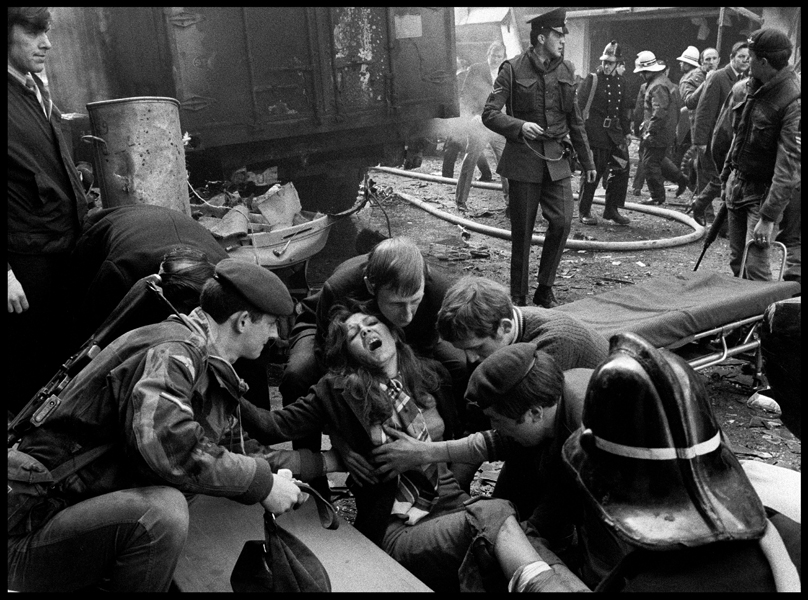
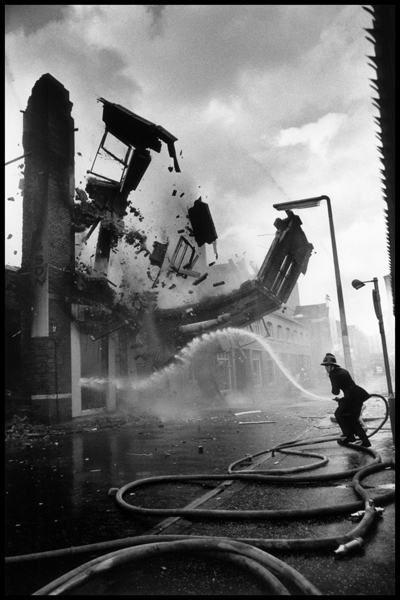
I choose Abbas because I found his photography interring and powerful. He was born in Iranian but resided in Paris. Abbas photography portrays a political message, he achieves this by capturing poignant moments. His war photography isn’t necessarily graphic but it still tells the story of the violence and tragedy. Some of my favourite work of his is the collection on Northern Ireland. I really enjoy how he does not work in colour and lets the captured black and white imagine do the talking. The Northern Ireland collection applies to me because of how local it is to me. It captures a side of history in Ireland that is spoken about with very hushed whispers.
C) Read The problem with photojournalism in Africa by M Neelika Jayawardane and provide a short synopsis of the article.
The main ideas behind this article is to show how unfairly treated African photographers and journalists are. Western media corporations regularly overlook the work that African photographers and journalists are producing. If there are ever stories in the media about Africa they are usually from a Westeren point of view. This can lead to the stories exploiting false Africian stereotypes and having a very biased outlook on the situation. Stories can often group the whole continent of Africa under umbrella terms, like the starving Africans or the poor vulnerable African desperately trying to flee their war torn country. Articles have portrayed these people as savage and inhuman.
Another major problem with photojournalism in Africa is how undervalued they are within the photography world. African photographers and journalists are not held to the same standard as ones from Europe and America. African workers would be paid significantly less than their European counterparts. The view with the Africian photographers is that they aren’t as well trained and the quality of work they produce is unfinished and inadequate.
Overall this article gives very good insights to the inequalities between the Western world and Africa. It demonstrates that there is systematic racism present in the media world and that there needs to be something done to bridge the gap.
D) Read ‘The shot that nearly killed me: War photographers – a special report’ and share an image/story that affected you the most. Tell us why?
The story that affected me the most was Greg Marinovich in Soweto in 1990. This story accompanied by the photo really stood out to be because of the brutal actions of the men in the photography. It was captivating to hear how Marinovich reacted to this situation. You’d see these sort of war and conflict photographs constantly but you never think of what it feels like to capture theses photos. It is also inhuman what theses photographers are doing. They are not intervening or trying to stop the conflict they are simply documenting moments for history. It was powerful to hear how he felt capturing these images being so scared for his life but allowing himself to be so vulnerable for a photograph. It seems almost ridiculous to risk you life for something so simple as a photo. However they know the true power of photography and what a picture can do.
 Aoife Markey’s Blog